Tennessean
October 1, 2007
Original
Article
Home to 19 pachyderms shares facts
about them
Driving through Tennessee, families
may see fields of crops or livestock.
Near Hohenwald, Tenn., there's
a special place with fields of elephants.
The Elephant Sanctuary is 65 miles southwest
of Nashville. It was founded in 1995 by Carol
Buckley and Scott Blais to provide a natural
habitat refuge for old, sick and needy Asian
elephants — perhaps those no longer needed
or valued by circuses or zoos.
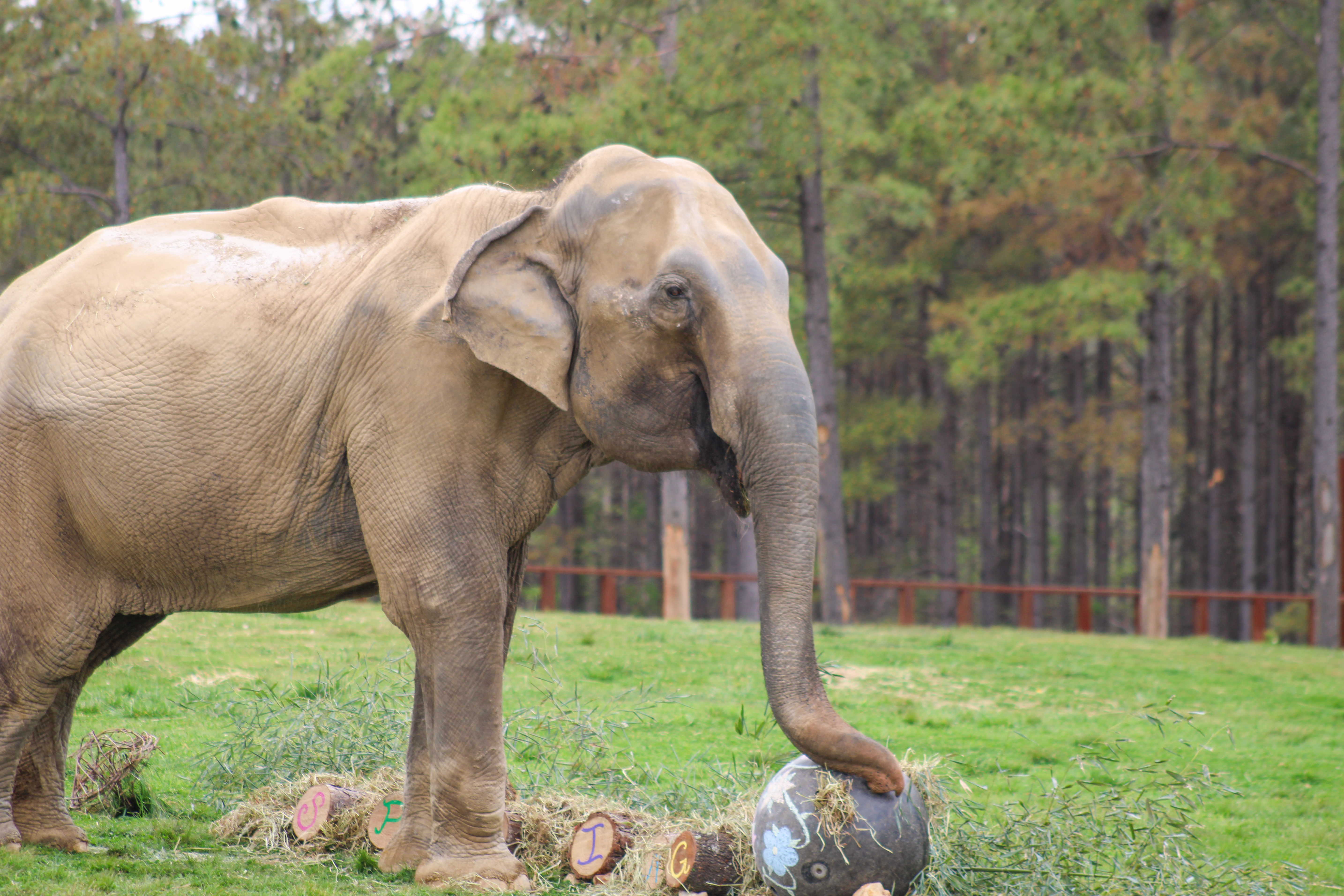
The sanctuary is home to 19 elephants
on hundreds of acres. The owners would like people
to know more about the elephants that live there.
Elephants are members of a mammal
group known as pachyderms. Pachyderm is a Greek
word that means "thick skin." An elephant's
skin may be 1.5 inches thick, but it also is
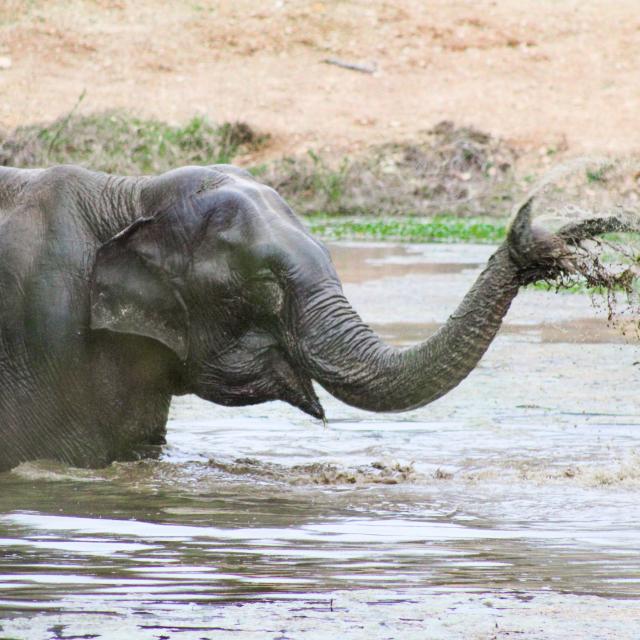
sensitive. Elephants spend part of every day
bathing, taking mud baths and throwing dirt on
their backs to protect their skin from biting
insects and the sun.
Elephants are descendants of ancient
mastodons. Only two species of elephants survive
today, the Asian elephant and the African elephant.
The sanctuary is now home to both species.
All elephants
have a long upper lip-nose called a trunk that
is used for a variety of purposes. Equally obvious
is the fact that elephants are large, the largest
land mammals on earth. Elephants grow to their
deluxe size by eating only plants.
Both species of elephants are very social animals.
Elephants are born into herds that are made up
of adult females, or cows, and their young calves.
Each herd is led by a female called a matriarch.
Females stay with the herd throughout their lives.
Male calves stay with the mother's herd until
they reach puberty at 10 to 14 years. At that
point, they leave the herd and join a bachelor
group with other young bulls.
Though there are many similarities,
Asian and African elephants are separate species.
Asian elephants have smaller ears and tend to
be smaller overall than their African cousins.
Nearly all African elephants grow large, visible
incisor teeth called tusks. Among Asians, usually
only the males exhibit tusks.
African elephant populations declined
rapidly in the 1970s and 1980s as thousands were
killed for their ivory tusks. In Asia, people
live more closely with the elephant than do people
in Africa. The Asian elephant has been worshipped
as a god and trained for use in clearing land
and logging the forests.
In spite of Asian elephants' usefulness
to humans, their numbers also have declined over
the past 40 years, primarily because of habitat
destruction.
The close association between
humans and Asian elephants led to the use of
elephants in circuses and other entertainment.
There are many performing elephants in North
America today, and some are well treated and
healthy. Unfortunately, others are not so lucky.
Despite its great size, the elephant is a gentle
creature and can easily be abused by people.
The Elephant Sanctuary in Tennessee
was established to provide a safe home for some
of these elephants. It isn't open to the public,
but students can learn more about elephants and
the sanctuary at www.elephants.com.
— THE ELEPHANT SANCTUARY |