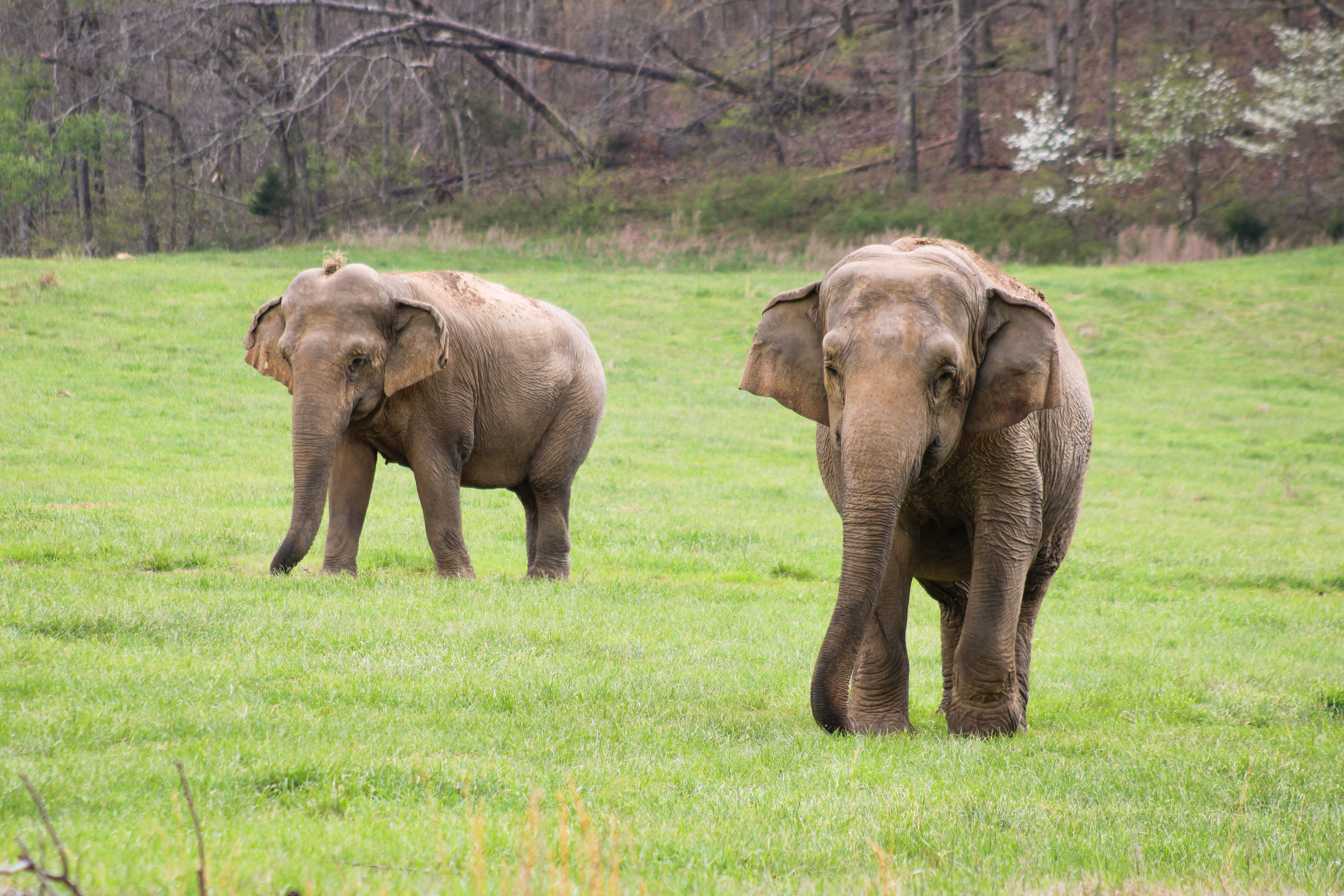
World Elephant Day: How Sustainable Palm Oil Can Help Protect Wild Elephants
A Conversation with Katie Anest, Education Coordinator and Co-Chair of The Elephant Sanctuary's Sustainability Committee
Every year on August 12, people around the world celebrate World Elephant Day—a global day of awareness dedicated to elephants and the challenges they continue to face in both the wild and human care.
At The Elephant Sanctuary, World Elephant Day is an opportunity to celebrate these remarkable animals while recognizing that protecting elephants extends far beyond our 3,060 acres in Tennessee. While we focus on providing lifelong care for elephants, our mission and our commitment also includes supporting the conservation of wild elephants and the habitats they depend on.
One of the greatest threats facing wild Asian elephants today is habitat loss. As forests are cleared and fragmented, elephants lose the space they need to roam, forage, and migrate, increasing conflict between people and wildlife. While these challenges may seem far away, the choices we make every day—from the products we purchase to the companies we support—can have a meaningful impact.
One way The Elephant Sanctuary helps address these global conservation challenges is through our Sustainability Committee. Made up of team members from across the organization, the committee works to promote environmentally responsible practices throughout The Sanctuary while encouraging our supporters to make informed choices that help protect elephants and the world we share.
To recognize World Elephant Day, we sat down with Katie Anest, Education Coordinator and Co-Chair of The Elephant Sanctuary's Sustainability Committee, to discuss sustainable palm oil, why it matters for elephants, and how each of us can help protect wild elephant habitat.
Q&A with Katie Anest
The Sanctuary's Communication Manager, Ashley D.: Today we are sitting down with Katie, Education Coordinator and Co-Chair of the Sustainability Committee at The Elephant Sanctuary, to discuss sustainable palm oil and how everyday choices can impact wildlife conservation around the world. Palm oil is found in thousands of products people use daily, but many do not realize the connection it has to wild elephants and their habitat. Katie, thank you for joining me! Can you start us off by explaining the basics? What is palm oil?
Katie: Thank you for having me! Palm oil is one of my favorite topics! It is actually what inspired me to study zoology and become an educator!
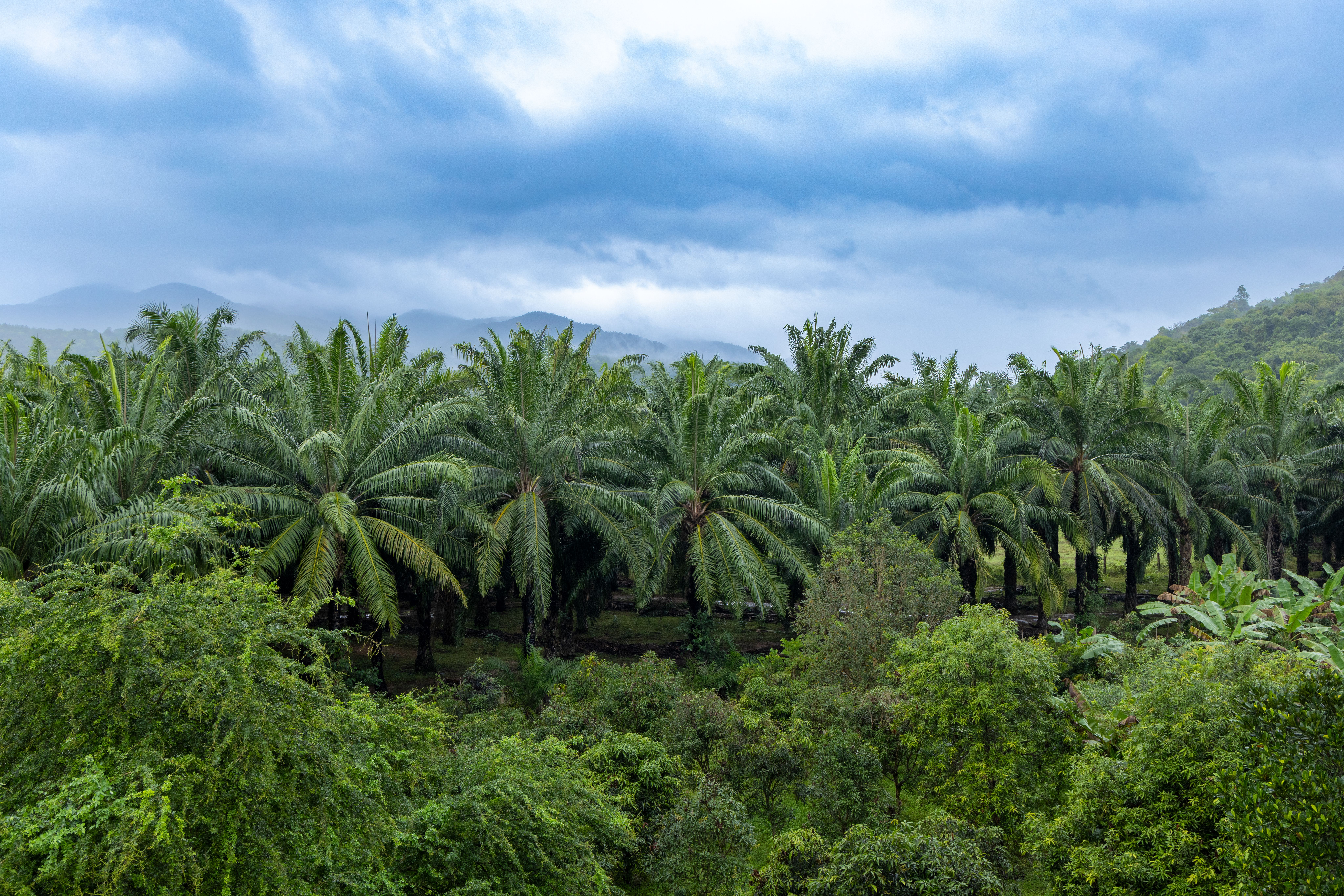
Palm oil is a vegetable oil made from the fruit of oil palm trees. It is one of the most widely used ingredients in the world because it is efficient and versatile. In fact, it is found in roughly half of packaged products, including foods, soaps, candles, cosmetics, and cleaning supplies. Palm oil itself is not inherently bad. Countries like Indonesia and Malaysia rely heavily on palm oil production as part of their economy, and oil palm produces far more oil per acre than alternatives like coconut or canola. The problem comes when high conservation value forests are cleared to create agricultural land. That is what is meant by "unsustainable palm oil."
Ashley: How does unsustainable palm oil production affect elephants specifically?
Katie: The consequences for elephants have been severe. One of the greatest drivers of extinction for Asian elephants is habitat loss and habitat fragmentation. As of 2026, there are now many nationally owned Indonesian and Malaysian oil palm plantations in Southeast Asia that have transitioned to certified sustainable growing practices, but following centuries of colonial exploitation and industrial agricultural growth in Southeast Asia, large areas of forest that once supported wild elephant populations were cleared for industries like oil palm trees, rubber trees, and coal mining.
As forests shrink and migratory corridors disappear, elephants are increasingly forced outside protected areas and into farmland in search of food. This creates human-elephant conflict, where local crops are damaged and interactions between forest-edge communities and elephants can become dangerous or even deadly for both.
This issue matters not only because elephants are endangered, but because elephants are ecosystem engineers. Healthy elephant populations help maintain forest structure, disperse seeds, and support biodiversity across entire ecosystems. Protecting elephant habitat helps protect forests and the countless species that depend on them.
Ashley: So where does sustainable palm oil fit into the solution?
Katie: Purchasing products from companies that use sustainable palm oil helps protect wild elephant habitat. Period. Certification systems like RSPO (the Roundtable on Sustainable Palm Oil) establish standards for more responsible production, including protections for forests, wildlife habitat, peatlands, and supply chain transparency.
It is important to note that avoiding palm oil entirely is not a realistic solution. The demand for vegetable oil is already extremely high, and alternative oils, like coconut, can require up to nine times more land to produce the same amount of oil. That means switching away from palm oil entirely could actually increase pressure on forests and wildlife habitat.
Ashley: Many readers may not realize that palm oil is something discussed even here at The Elephant Sanctuary. How does it connect to The Sanctuary's work?
Katie: One thing I appreciate about The Elephant Sanctuary is that even though our elephants live here in Tennessee, the choices we make as an organization still connect us to global conservation issues.
Some of the products we use every day contain palm oil, from cleaning supplies used throughout the barns to elephant feed items like peanut butter, which is often mixed with medication to make it more appealing for our aging elephants. Whenever possible, The Sanctuary prioritizes purchasing from brands that are committed to sourcing sustainable palm oil. It may seem like a small decision, but choosing products made with responsibly sourced palm oil helps support agricultural practices that reduce pressure on tropical forests.
In addition to our purchasing practices, The Elephant Sanctuary also partners with international conservation organizations working to protect elephants globally. Some partnerships focus on improving welfare for elephants living in human care, while others support wild elephant conservation and conflict mitigation. Partners like Wild Welfare, Thai Elephant Project, and Sumatran Ranger Project help support communities living alongside Asian elephants in areas where crop-raiding and habitat fragmentation are common realities.
Ashley: This feels like a big global issue. What are some realistic actions people can take here in America?
Katie: I am so glad you asked! Back in 2021, I am proud to say that I contributed to the launch of the PalmOil Scan app, a free app which allows users to scan product barcodes and quickly see whether companies are committed to sourcing sustainable palm oil. It transforms sustainability from something overwhelming into something actionable and accessible during everyday shopping trips. You can search for it in any app store!
Ashley: Before we wrap up, what is one message you hope readers take away from this conversation?
Katie: Ultimately, the message is hopeful. Conservation is not about perfection; it is about participation. Most people genuinely want to make responsible choices, but they are not always given the information or tools to do so. Helping wild elephants is not limited to scientists or people working directly in the field. Every person already has tools they can use to help protect wildlife and wild spaces.
Protecting Elephants Starts with Everyday Choices
At The Elephant Sanctuary, caring for elephants means thinking beyond the elephants who call Tennessee home. Through our Sustainability Committee, educational programming, international partnerships, and organizational purchasing practices, we strive to support a future where elephants—both in human care and in the wild—can thrive.
This World Elephant Day, we invite you to take one small step for elephants. Learn more about sustainable palm oil, download the PalmOil Scan app before your next trip to the grocery store, and consider supporting companies that are committed to sourcing Certified Sustainable Palm Oil (CSPO).
Together, our everyday choices can help protect forests, wildlife, and the future of elephants around the world.