This is Our Home

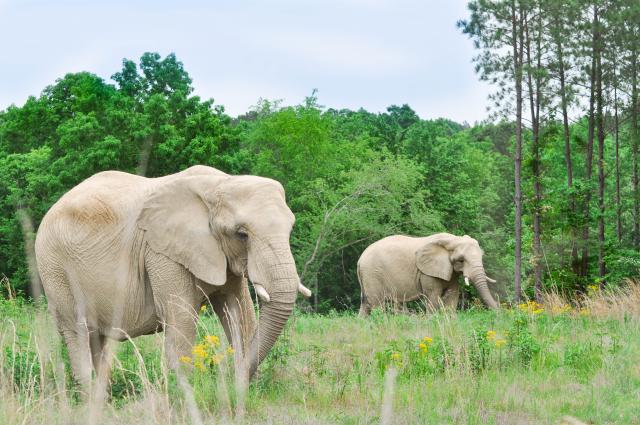
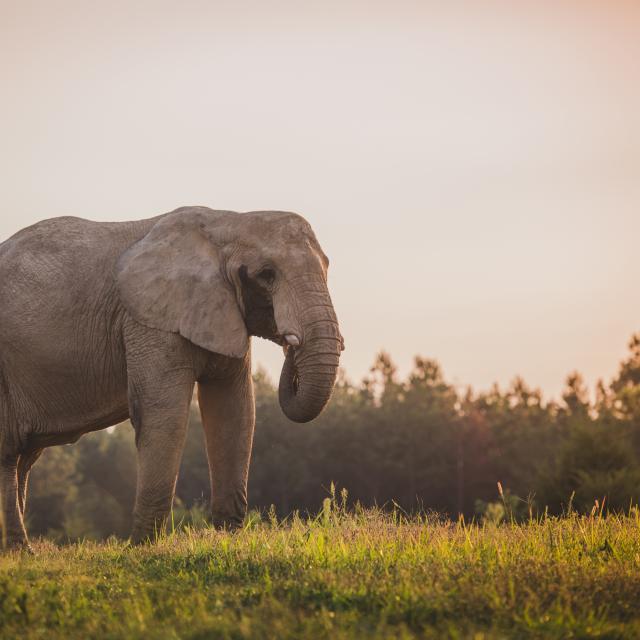
Aerial View of SanctuaryThe Elephant Sanctuary in Hohenwald, Tennessee, is the nation's largest natural-habitat refuge developed specifically to meet the needs of endangered elephants. It is a non-profit organization, licensed by the U.S. Department of Agriculture and the Tennessee Wildlife Resources Agency, designed specifically for old, sick or needy elephants who have been retired from zoos and circuses. Utilizing more than 2700 acres, it provides three separate and protected, natural-habitat environments for Asian and African elephants. Our residents are not required to perform or entertain for the public; instead, they are encouraged to live like elephants.

Phil Snyder, regional director emeritus of the Humane Society of the United States has stated, "The Elephant Sanctuary represents the future of enlightened captive elephant management."

Development of The Elephant Sanctuary's facilities began in March 1995. Phase I includes a heated barn, a 200-acre steel pipe and cable elephant corral, and a 222-acre perimeter "people" fence.

PHASE II was completed December 1999, adding a 6-stall, 9000 square foot, state-of-the-art elephant barn to the facility.

Land expansion began Oct 2001 with the acquisition of a parcel of wilderness known locally as the Highland Lake Land - a 700-acre parcel of land with a 25-acre lake.

July 2003 marked the final land acquisition which constitutes our expansion. This 1840–acre parcel of wilderness was owned by International Paper company prior to becoming Elephant Country.

The African Elephant Habitat was completed January 2004. This 300-acre facility with its award-winning elephant house is a showcase for innovative solar use.

Renovation of the Phase I barn was completed Nov 2004, creating a Quarantine Facility for sick elephants.

In September 2005 we completed construction of our new Asian elephant house. (See slide show detailing construction).

Experience our 10-year timeline. (By clicking on any of the events or photos, you will be taken to a page which describes that particular entry in more detail)

Funding for all of these projects came from public contributions, membership support and in-kind donations.

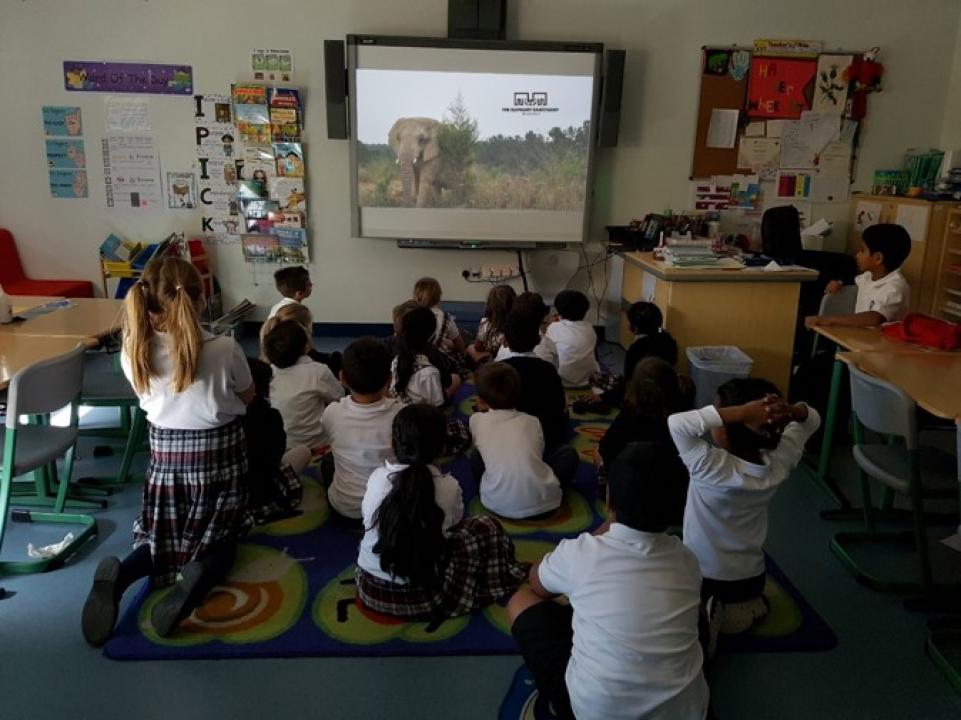
As a true sanctuary, The Elephant Sanctuary is not intended to provide entertainment. Patron-level donors are invited to tour the facility through our VIP Pledge Program, but the Sanctuary is closed to the general public. Education, however, represents a key component of the Sanctuary's ongoing mission. Since its inception, the Sanctuary's outreach program has taught thousands of school children around the globe a respect for wildlife while learning about the endangered Asian elephant.

One of the most exciting in-kind donations we have received is distance-learning teleconferencing equipment from PictureTel Corporation and membership in Project DIANE (Diversified Information and Assistance Network). This is a collaborative effort to promote educational, economic, and community development. Through interactive telephone, video, and multimedia computer technology, the Sanctuary teleconferences live with schools, libraries, community centers, etc., nationally and internationally.

Video teleconferencing is a fairly new technology. With the use of high-tech digital telephone lines and surveillance type cameras, this technology creates a connection that transmits live pictures and sound. The Sanctuary has an extensive camera system; in the offices, barns, and outside in the elephants' habitat. The cameras are rotated by remote control, displaying the elephants, their entire habitat and their barn facilities.

The Discovery Channel, PBS, 20/20, CNN, and many others have made people aware that elephants are majestic creatures who are highly intelligent, complex, social, and sensitive individuals. In the wild, elephants are migratory, walking 30 to 50 miles each day, and form intricate family structures. They grieve for their dead in a more-than-instinctive way. They show humor and express compassion for one another with intense interactions. The reality of their lives in captivity is that many are in chains up to 18 hours a day. They are enclosed in steel pens -- often alone -- broken and controlled by fear and intimidation.

Goals of The Elephant Sanctuary of Tennessee

Goals Achieved Since March 1995

  Establishment of The Elephant Sanctuary of Tennessee as the first prototype refuge representing the future of enlightened captive elephant management.
  Implementation of the International Asian Elephant Habitat Program.
  International Elephant Health Assistance Program
Offering live feed video on our web site EleCam.
Acquisition of 2700 acres of diverse habitat with caretaker residence, complete with a 25-acre spring-fed lake.
Construction of a 550-acre perimeter "people" fence.
Construction of 500-acres of elephant corral.
Construction of a 2-stall quarantine barn.
Construction of a 6-stall Asian elephant barn through the "Raise the Roof" Capital Campaign.
  Construction of a world-class 5-stall African elephant barn.
Educational outreach presentations to thousands of school children - nationally and internationally.
Membership in Project DIANE - a live, interactive, educational teleconferencing computer network.
Rescued 9 endangered Asian elephants.
  Rescued 3 endangered African elephants.
Membership in The Association of Sanctuaries.
Licensed with the United States Department of Agriculture.
Licensed with the Tennessee Wildlife Resources Agency.
The establishment of the "Save Jenny" Trust representing the sponsorship that endows and ensures her basic care and the care of other elephants who will follow.
Construction of a 6,000-square-foot hay barn.
Implementation of a year-round internship program.
Complete identification of all vegetation growing on the Sanctuary property.
Development of a fourteen-member staff.
Recognition as a resource for information by the animal welfare community.
Acquisition of a semi-trailer to transport rescued elephants.
  Recipient of Delhi, the first ever USDA-confiscated elephant.
  Implemented innovative healthcare treatments for elephants suffering from life-threatening osteomyelitis.
  Developed a membership of 31,000.
  Established a bi-monthly Volunteer Day program.
  Recipient of Lota and Misty, the focus of a USDA lawsuit against the Hawthorn Corporation.
  Raised the funds to build a state-of-the-art 9-stall Asian elephant barn.
  Established quarantine barns and facilities to accommodate elephants that have been exposed to and suffer from tuberculosis.
  Rescued 11 elephants owned by the Hawthorn Corporation found guilty of 19 counts of cruelty to elephants.
  Established the first of its kind Elephant Health and Welfare Institute.
Immediate Goals
Install 20 additional field cameras throughout the habitat to observe the elephants' behavior 24/7.
Create an innovative, non-intrusive education center.
Pioneer non-invasive research on Post Traumatic Stress Disorder in wild-caught elephants living in captivity.
Long-term Goals
Rescuing additional old, sick or needy elephants.
Educating the public through all available channels, including construction of an education center for multi-media programs and silent, non-intrusive teleconference viewing of the elephants.
Construction of additional facilities (five) to accommodate up to 100 elephants.
Research and execution of the reintroduction of de-programmed captive elephants into a semi-wild environment in Southeast Asia.


line

Home | Our Mission | About the Sanctuary | Search | EleCam
All About Elephants | You Can Help | Our Girls Gift Shop | Photo Gallery
Meet the Elephants | Sanctuary News | The Curriculum
Trunklines Newsletter | Site Map | Contact Us